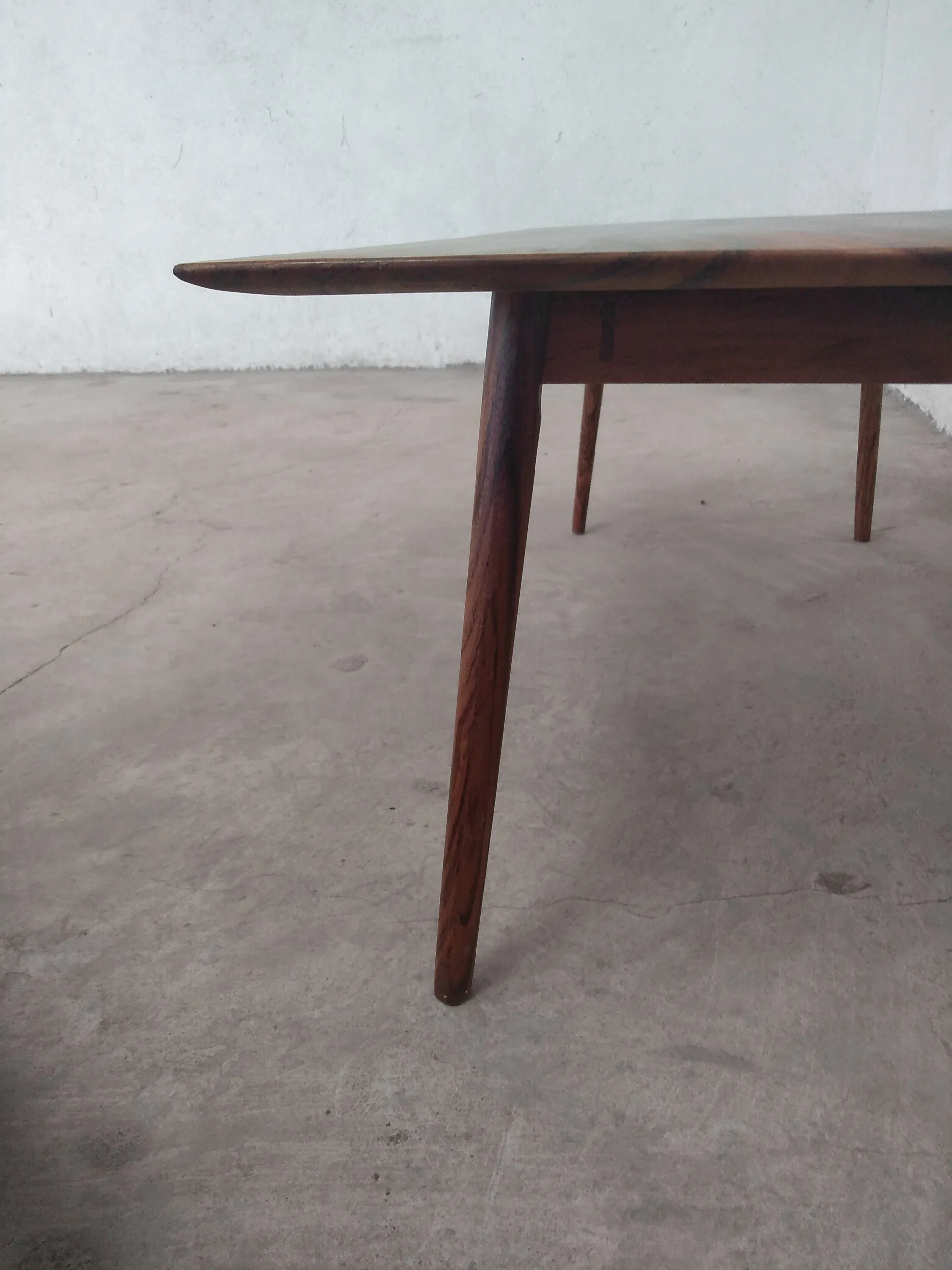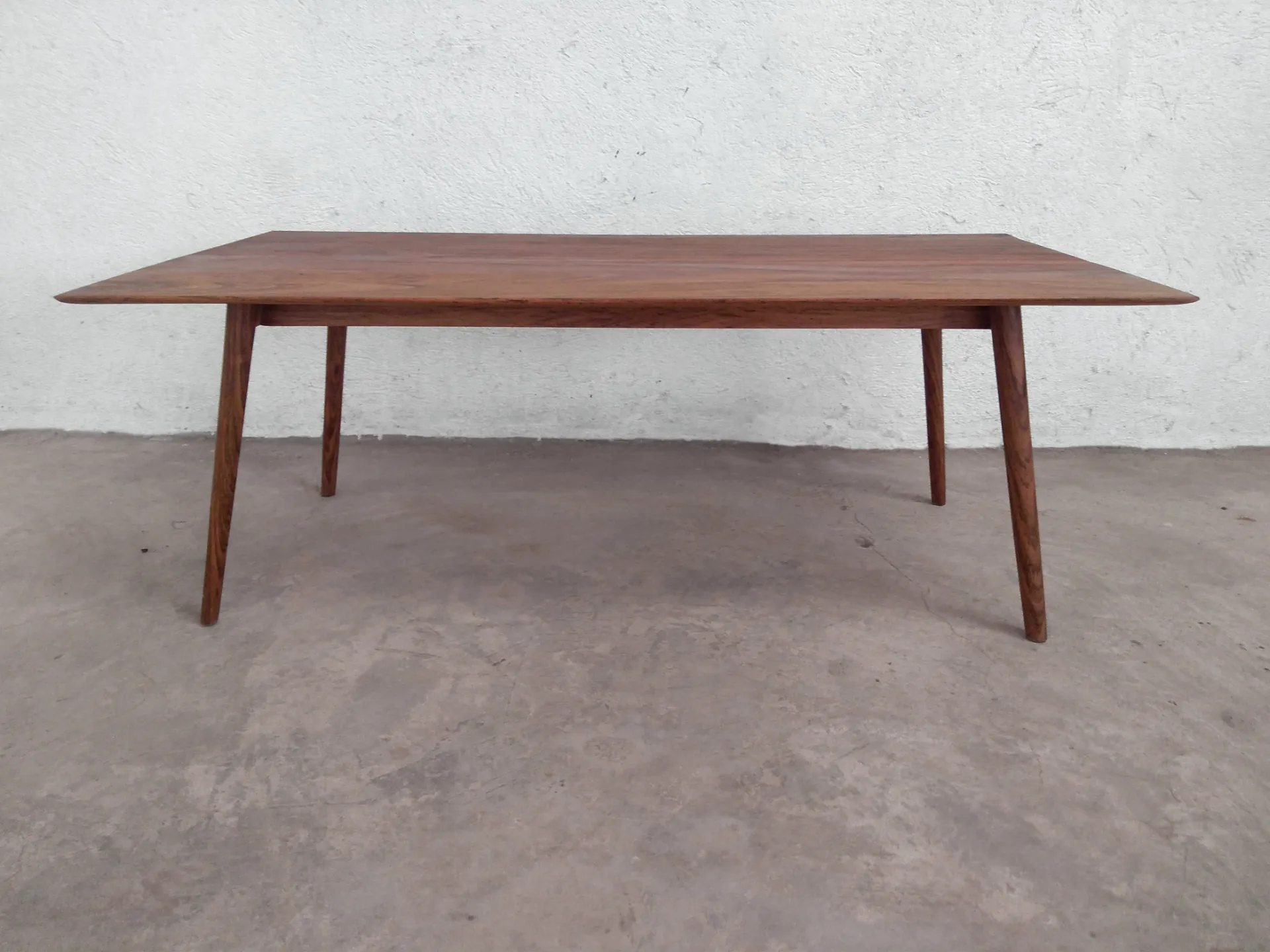
This piece is illustrative of a fundamental principal in design. One that has taken me a very long time to discover. Namely the framework that we bring to a project. When I designed this table I was completely locked into a particular paradigm. Splayed tapered legs, dark timber, pillowed table top edges, extremely delicate proportions. At the time I couldn’t see or draw anything else. Yet years later I look back on this and it looks foreign, all wrong. Somewhere along the line I extricated myself from that paradigm. To be aware these “views” or “rose tinted glasses” that influence us through upbringing, culture, training or exposure. Or that we impose on our selves through our ideals. I have realized this is a fundamental aspect of being a designer. How do we become aware of this? I don’t know if I can fully answer that yet but for me now I work on a project intensively, then I leave it and forget about it for sometime. When I come back to it with fresh eyes I can often see where and how my particular paradigm has had an overbearing influence. I don’t think we can completely disconnect ourselves from what we bring to the process and why should we but maybe we can start to become aware of our biases.
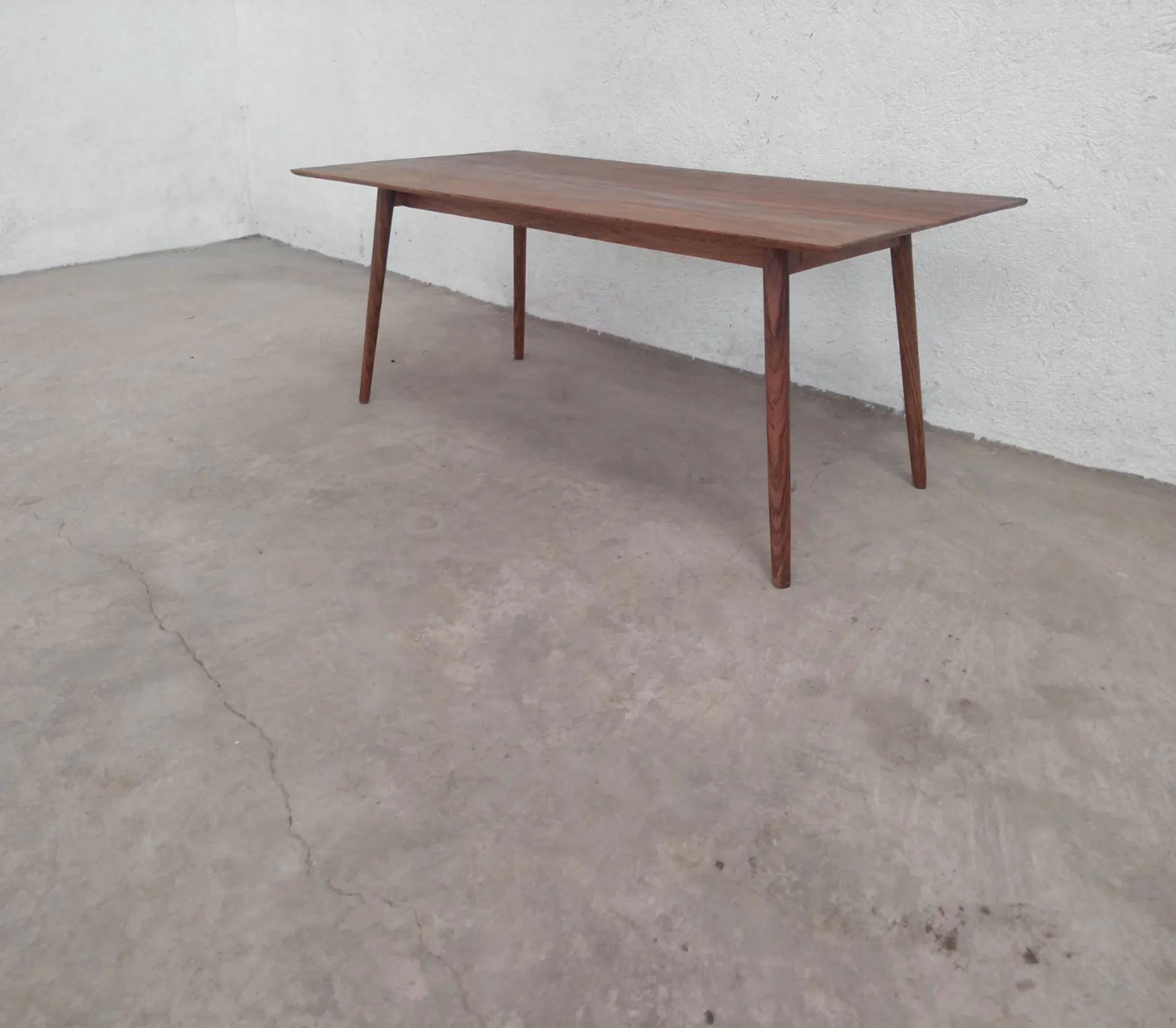
I think it is worth noting that this design isn’t commercially viable. It just isn’t strong enough. It is a delicate balance between lightness and durability. When you push the limits invariably sometimes you go past one extreme. I strongly believe furniture needs to be designed to be used and not coveted like it’s something precious. Here I went too far.
All that said I think this was an inevitability for me. At the time I was breaking free from the classic Zimbabwean traditional teak paradigm to a strong Danish influenced mode. I don’t know that I have found my own voice yet but I think this was a necessary step to getting there.