
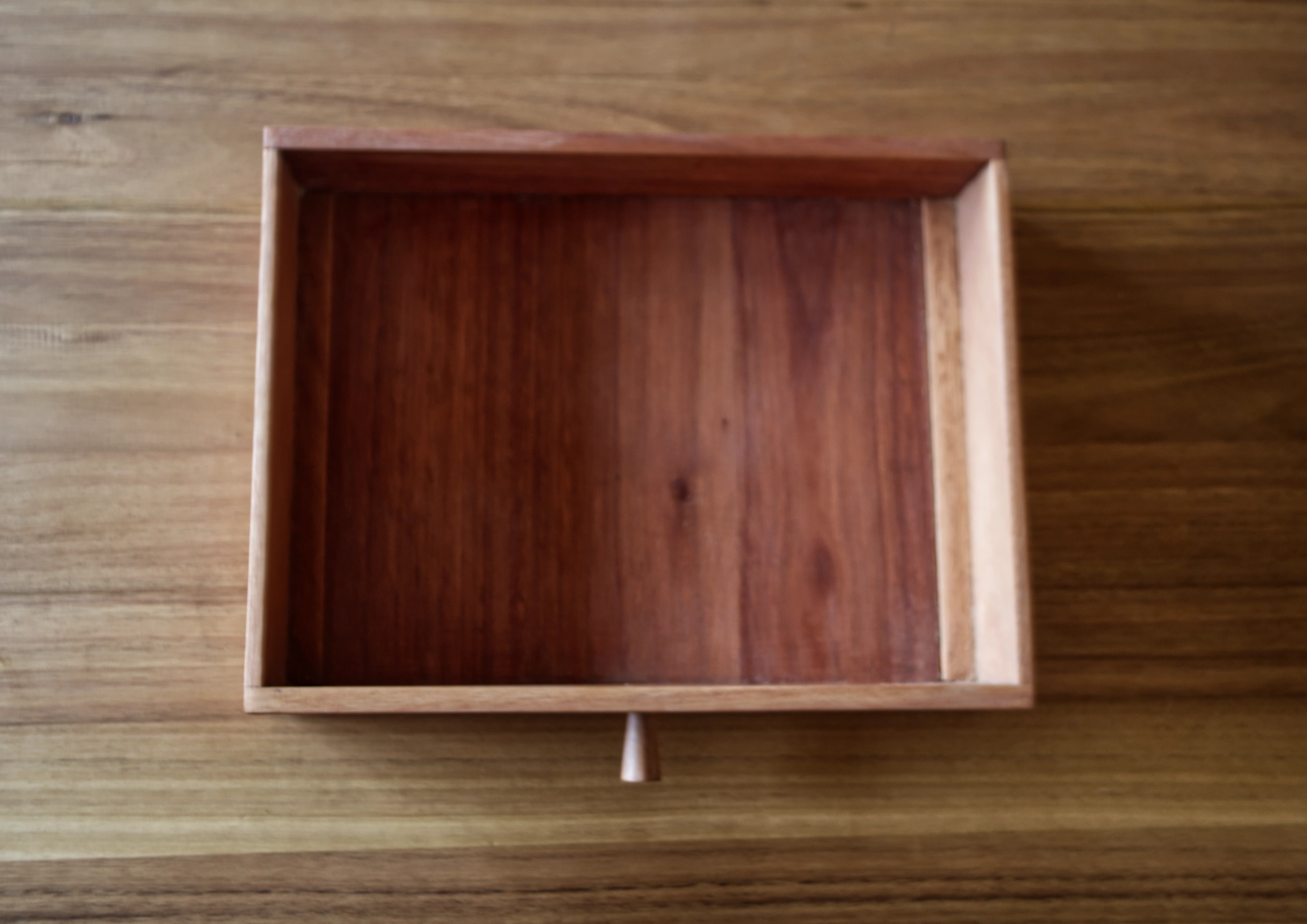
There are many different ways to make a drawer box. What I will be discussing here is a very traditional method that is hand crafted. Modern advances in hardware make it almost always better to use metal ball runners. These enable full extension, they don’t wear out, they are very cost effective and the drawer box action is very smooth. However very occasionally a project calls for a more traditional approach. This was the case with our bedside tables. I wanted something delicate to reflect the intimate space of a bedroom. However this poses a number of challenges. If the sides of the box are light and elegant then that doesn’t allow for much surface area for the running face and there isn’t space for a groove to allow the base to expand and contract with humidity changes. The solution is to introduce a drawer slip that solves both challenges.
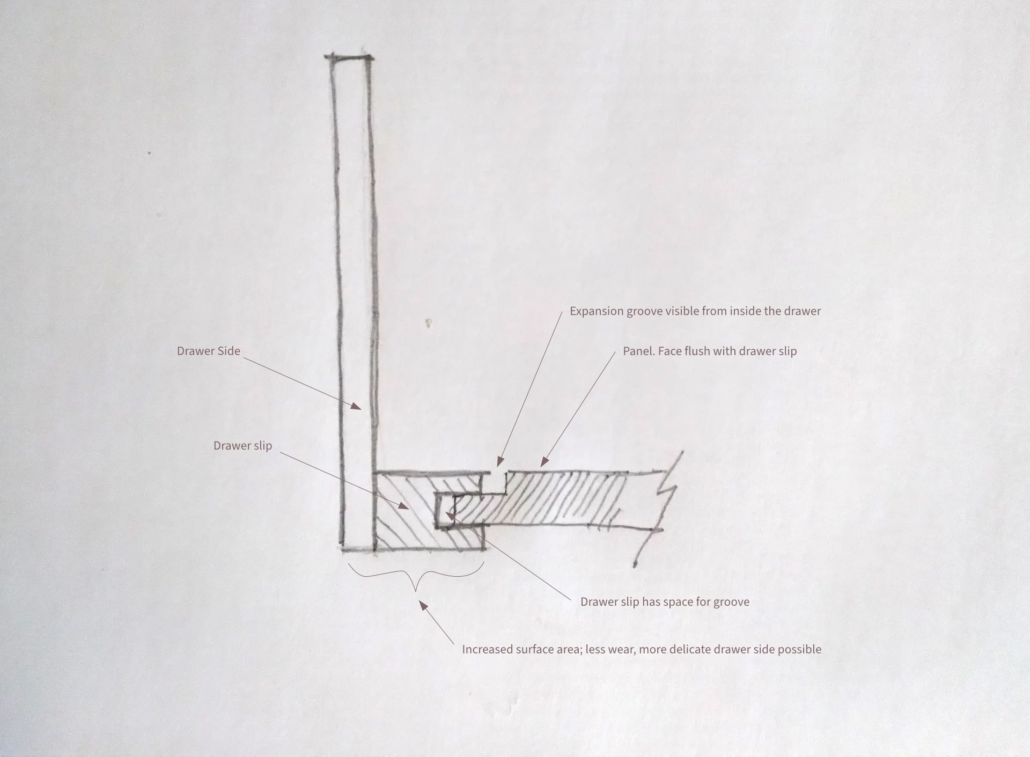
Here you can see a partial cross section of the drawer box looking from the front view. This design allows for seasonal movement of the drawer base and provides good surface area for the drawer to run along. It does however mean the expansion gap is visible from the inside of the drawer.
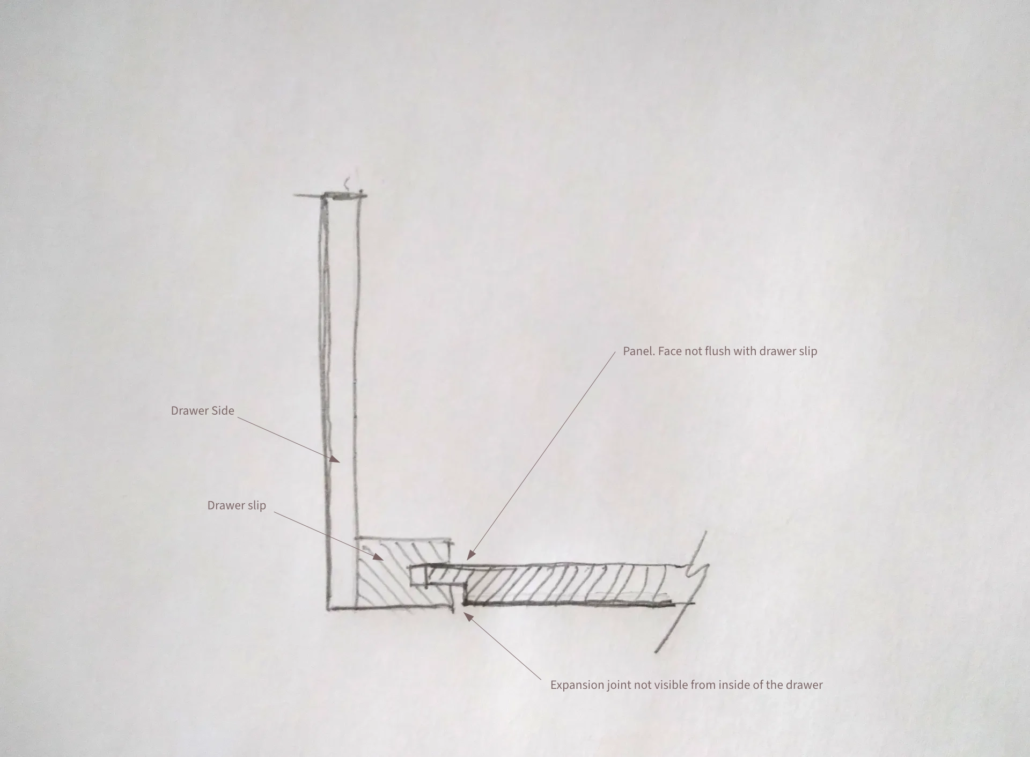
This method is very similar however the drawer base panel is oriented the other way round. This hides the expansion gap below the drawer but creates a slight lip on the outer edges where the base meet the drawer slip. This is the method we chose for our bedside tables. It gives the inside of the drawer a very clean look.
There is another factor to carefully consider. The joinery of the sides to the drawer fronts. The obvious answer are dovetails due to their geometry offering inherent strength. Most production shops would use a dovetail machine to cut these. In this day and age this is a sound decision as cutting them by hand is very time consuming and adds significantly to the cost to the end consumer. However machine cut dovetails work best in a blind orientation where they are not visible from the front of the drawer. This is due to the nature of the conical cutter – it produces half round tails when viewed from the front. So to achieve the look that I wanted for our bedside table where the tails come all the through and are rectangular as apposed to half round I opted here for hand cut joints. Here you can see in the left image the tails are visible from the front and the are rectangular which is the detail I was going for.
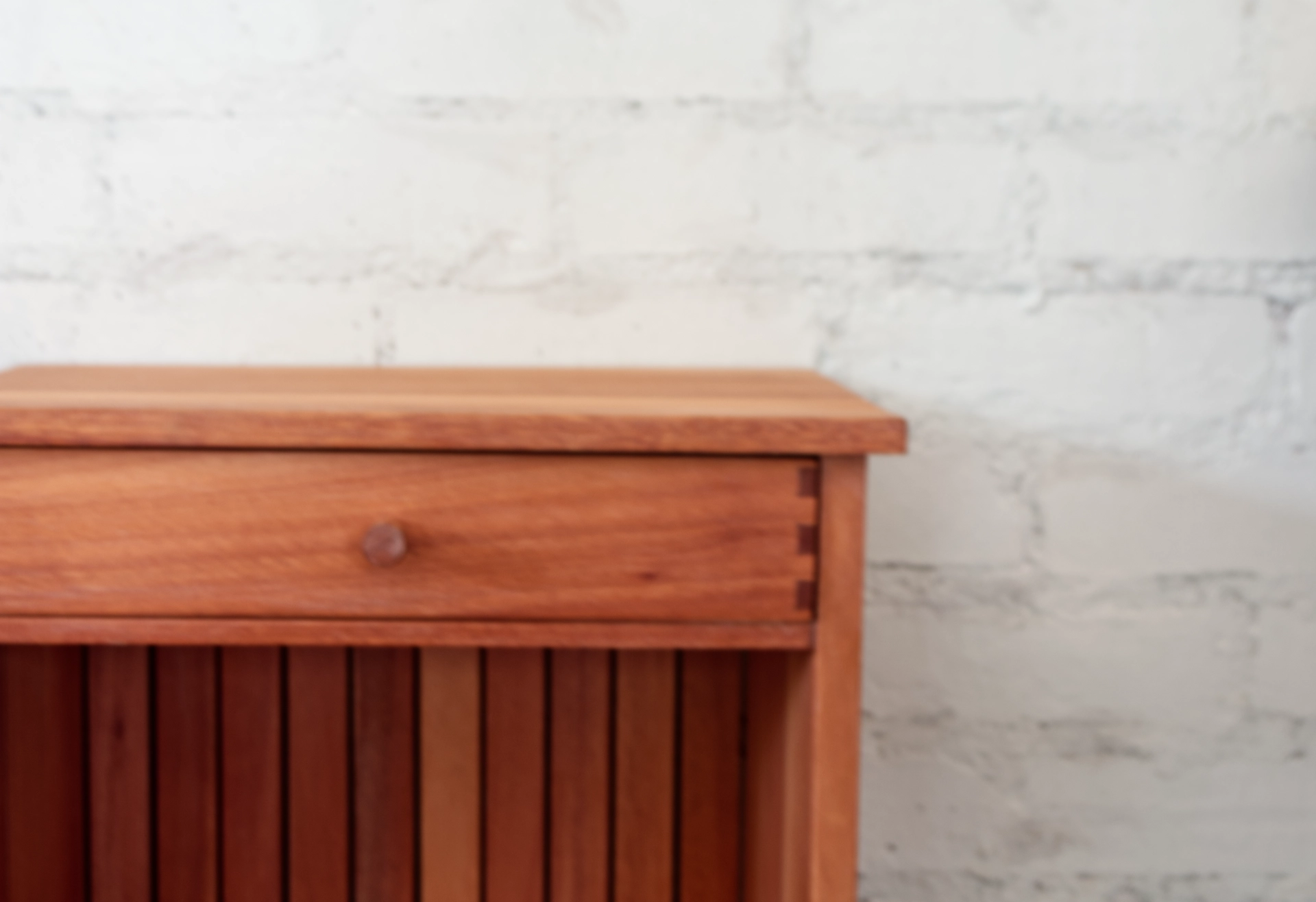
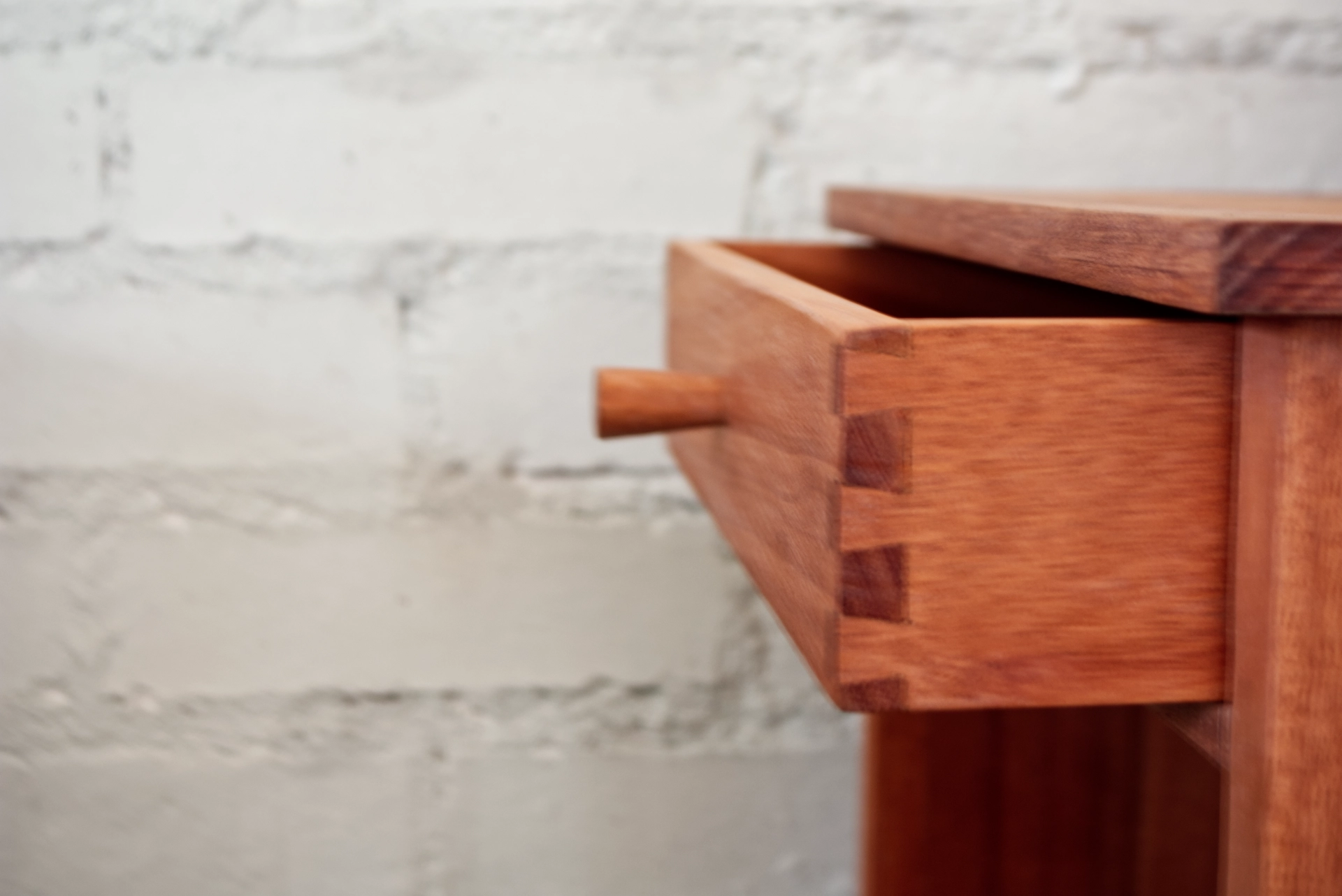
There is a significant trade off here. Although I achieved my goals with this design. The extra time it takes to make a drawer box in this fashion probably wouldn’t be worth it for most people. There are over thirty hours of skilled work that goes into making one of these bedside tables with the drawer box taking up a significant proportion of that. However this construction method – although largely superseded – is worth it for the select few that really value the detail and craft.